
6 Types of Dyslexic Visual Distortion (Plus a 7th That Might Surprise You!)
Words that seem to move on the page might be the most well-known feature of dyslexia.
In fact, a new website even offers the chance to see how it feels to try and read if the words won’t stay still!
However, you might be surprised to learn that, when they read, dyslexics can experience many different types of ‘visual distortion’, not just moving words.
What does the distorted reading experience feel like? These examples may help you to understand better…
- Swirl it around

Swirling or blurring text is commonly experienced by dyslexic readers.
- Double trouble

Double helpings of dessert may be welcome – but some dyslexic readers find that the text also appears doubled on the page (much less appetising!).
- Little and large

Ever seen a leaflet or poster where a designer went ‘creative’ by mixing up font sizes or stretching the text? Now imagine if all the text on every page of a book appeared as this type of mishmash…
- Mind the gap

Gaps between words may be either incredibly narrow or much too wide. Across an entire page, this can create a strange effect of ‘rivers’ of white space.
- Wibbly-wobbly
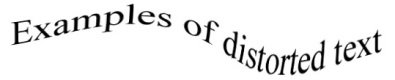
As well as rivers of white space, dyslexic readers may find the lines of their book look like a winding country road, rather than a nice straight Roman road of text.
- Help, I’m fading!

Parts of the text may appear washed-out or buried beneath a snow drift.
- Can you spot the problem?

This secret seventh example of distorted text is the most fiendish…
Can you identify why?
…I’ll give you a minute…
…Keep thinking…
…Oh, okay, I’ll tell you…
Of course, this example is completely regular! It’s well-spaced, nice and straight, with not a blur or swirl in sight.
Yet this is exactly how many dyslexic readers view a page of a book – or believe they do.
Not all dyslexics experience visual distortion
It’s a myth that every dyslexic person struggles with distorted text. Dyslexia exists on a spectrum, and every dyslexic child has different strengths and weakness. As a result, some dyslexics don’t have any problems with their vision at all.
These dyslexics may still have trouble with reading, but their troubles may be rooted in weak phonological awareness (difficulty understanding all the speech sounds that make up the English language and how they fit together to form words) and other common dyslexia traits.
Not all dyslexics realise they experience visual distortion
On the flip side, not all dyslexics are aware that they don’t read ‘normally’.
Not to get all philosophical on you, but … what is normal?
We all just assume that what we see is normal, so a child is not likely to say, ‘The words are moving!’
This dyslexic child may not realise that what they experience while reading is a condition with a name and a solution. All they know is that reading is hard and feels painful – so they avoid doing it.
For parents, this should be a red flag. If your child shows signs of dyslexia, even if they don’t complain of visual distortion, it may be worth taking them to a specialist optician qualified to diagnose the conditions that commonly cause visual distortion: Meares-Irlen Syndrome and binocular instability.
What can you do about visual distortion?
Visual distortion can be aggravating – both for a dyslexic child and a mother or father desperately trying to help their child to read. The good news is that there are plenty of ways to ease the reading process. These include quick fixes and longer-term solutions.
Find out more: 10 tips for reducing dyslexic visual distortion